What Happened to Forks Over Knives?
A closer look at what changed—and why clarity in plant-based nutrition matters more than ever.
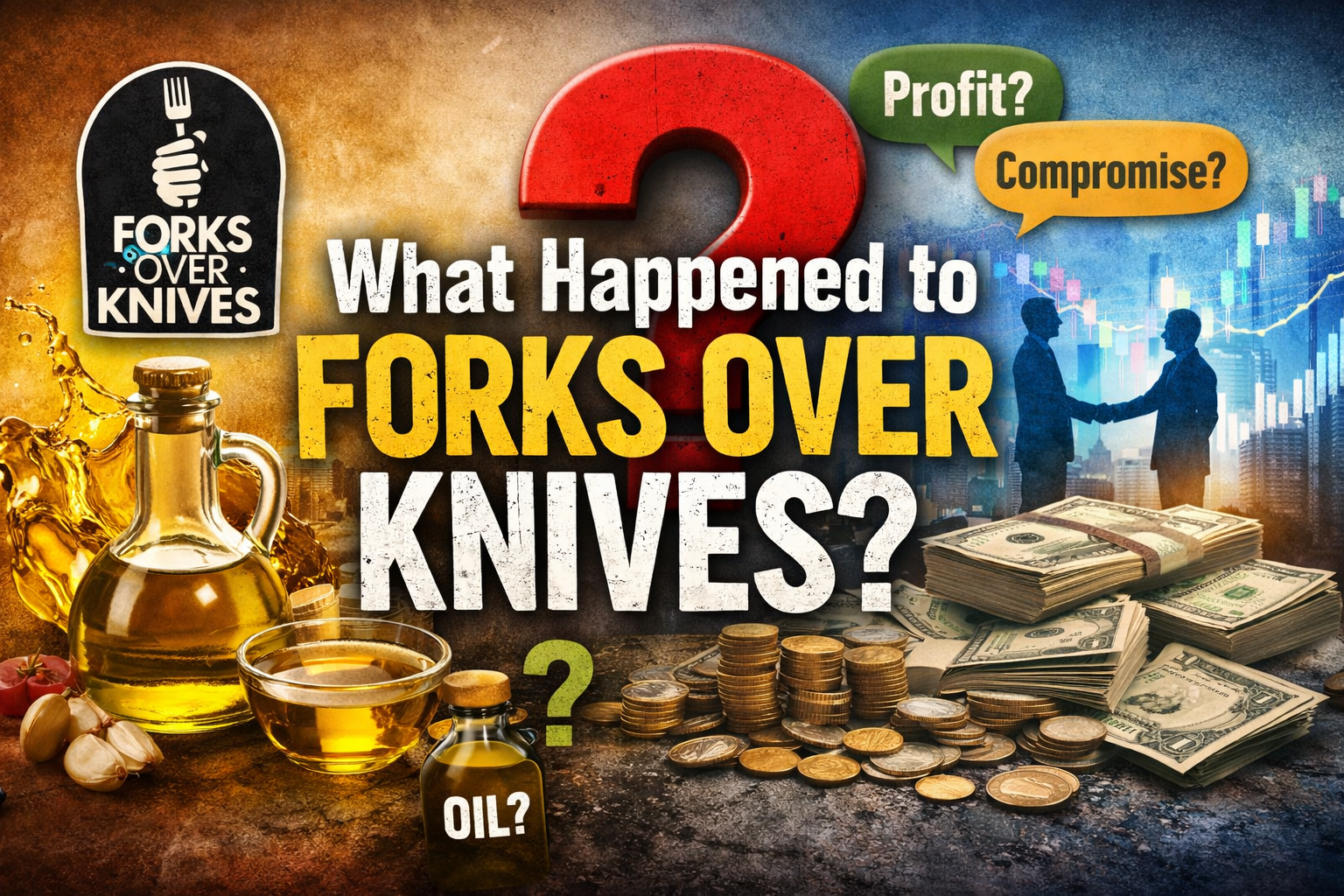
Why is Forks Over Knives shutting down?
I am not affiliated with Forks Over Knives in any way, but in the last week I’ve received several messages asking if I happen to know why it is closing its operations. I’ve also seen similar questions circulating online.
For that reason, I wanted to share my perspective in the hope that it provides independent context and helps us move forward as a community—stronger and wiser.
In 2021, Forks Over Knives merged with The Beet to form a larger company under Upbeet Brands and received $3 million dollars in venture capital funding—publicly announced here. From that point forward, it was no longer operating solely as an educational and advocacy platform, but as part of a structure with clear expectations for growth, expansion, and commercial development.
The downside is that when a company becomes tied to external funding, it becomes accountable to it, and that shapes how decisions are made. At that point, decisions are no longer guided only by what is true or what best supports people, but also by what sustains the business and satisfies those expectations.
By 2025, the company moved away from a strict whole food, plant-based audience and toward a more “flexible” market—one that accepts oil and looser interpretations of plant-based eating—in order to appeal to a wider audience and convert that audience into paying customers across multiple channels.
Many people were introduced to this lifestyle through the Forks Over Knives film, which stood for a very specific and consistent approach: real food, prepared in a way that supports the body, following a low-fat, whole food, plant-based diet without anything that is not whole. A nutrition standard without compromise. That clarity has helped make nutrition and lifestyle medicine more practical and applicable for many people.
Today, the FOK standard has become open to interpretation. Oil or no oil, flexible or strict—it is presented as a matter of personal choice.
There are already thousands of sources that promote “somewhat healthy” or flexible approaches to eating, so why do that? Moving in that direction is not about necessity—it’s about expanding reach. As clarity is removed, the message becomes easier to accept and more appealing to a wider audience. As my friend John McDougall used to say, people love hearing good news about their bad habits, and when the message becomes more flexible, it also becomes more marketable.
This does not mean that someone starting a nutritional path has to be “perfect” from the beginning. Health is built through daily choices, and habits evolve and improve over time.
What it does mean is that the guidance must remain clear and direct—not open to interpretation like the Dietary Guidelines or other forms of nutritional advice shaped by the system rather than by what truly supports the body.
With WFPB ORG and Naked Food Magazine, there have been many opportunities over the past 11 years to take a different direction—to make things easier, faster, and more commercially viable, to include advertising or products that are more widely accepted, or to adjust the message in order to reach a broader audience.
I have never done that, and I never will.
My work has always been about filling the gap in unapologetic health and wholistic living, maintaining an independent, clear, and consistent standard, and sharing evidence-based information without compromise.
Some of you were upset when Naked Food Magazine took a break, and I understand that. But if a company supported by $3 million in funding still could not sustain itself, imagine building a magazine (and WFPB ORG) without any funding—no external investment, no capital, no corporate backing, and no advertising. It gives a whole new meaning to the phrase, “there is no money in promoting fruits and vegetables,” doesn’t it?
That path is not the easiest one.
For me, it has meant moving more slowly, even when other paths would have been simpler. But it also means that the message remains intact—and if anything, continues to improve.
And that is the most important part.
What we are seeing now is not just the closing of a company, but the result of a change in direction over time.
As for us, we remain independent and committed to a clear standard. Naked Food Magazine and WFPB ORG continue to stand for a low-fat, whole food, plant-based approach that supports disease prevention and reversal, without compromise.
I hope this helps answer some of your questions and that you continue walking this path with clarity, through truth and health.
All my best,
Margarita Restrepo
Naturopath | Certified WFPB Practitioner
Founder & Editor-in-Chief, Naked Food Magazine
Founder, WFPB ORG
Would like to meet us in person and share an unforgettable experience together?